Peak Performance Powered by Science

By Maddie Pospisil

Donors Support UNO’s Athlete Optimization Strategy

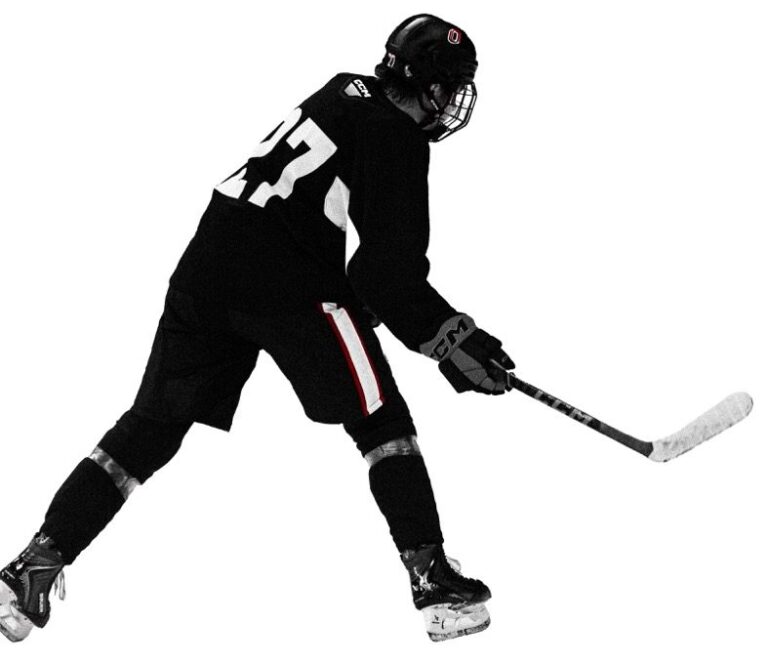
Last year, Tyler Rollwagen, forward on the Omaha Mavericks hockey team, was skating with an imbalance so slight that it was imperceptible to him.

Over time, the imbalance might have led to an injury — a sports hernia, a hip flexor strain or something else that could have derailed his season.

Fortunately, Rollwagen was wearing a sensor from Catapult, an athlete monitoring system that tracks heart rate, skating symmetry and workload intensity. Coaching staff regularly review the team’s data and analytics, tailoring workouts and adjusting schedules based on what they see.

“My imbalance showed up on Catapult,” Rollwagen said. “So I went to see our physical therapist Taryn and got it taken care of before it got to the point where I needed to miss practice or games, before I got injured.”

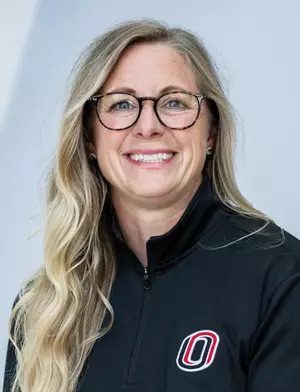
Taryn Ninemire, DPT, executive associate athletic director for athletic performance at Omaha Athletics, says that technology like Catapult is crucial for injury prevention and mitigation.

“Our approach has evolved,” said Ninemire. “What was once based on subjective input is now guided by objective data, helping us make smarter decisions and safeguard our athletes’ well-being. We can proactively identify patterns, monitor stress and recovery and intervene before minor issues become major setbacks.”

“By aligning research with real-world athletic needs, we’re creating an integrated support system that helps our student-athletes thrive both on and off the field.”

Taryn Ninemire, DPT

In the weight room, innovation continues with tools like the 1080 Sprint 2, a resistance training machine that uses a long cable and digital interface to provide assisted or resisted sprint training. Director of Hockey Strength and Performance Ben Silvers uses the data it collects to customize workouts for each student-athlete.

Omaha Athletics is expanding its use of technology and data through the Maverick Peak Performance Program, a collaboration with the School of Health and Kinesiology and the Department of Biomechanics. In April 2025, the program received funding from the Weitz Innovation and Excellence Fund, established through a $14 million gift from Barbara and Wally Weitz to support strategic initiatives at UNO.

As part of the Maverick Peak Performance Program, UNO launched a new sports science unit and welcomed its first-ever sports scientists, Billy Lozowski, Ph.D., and doctoral student Dimitri Haan, who work directly with Maverick sports programs to analyze data, reduce injury risk and optimize performance.

“We saw a unique opportunity to connect the academic and athletic sides of campus, building a partnership that fuels innovation and directly enhances athlete performance and care,” Ninemire said.

“By aligning research with real-world athletic needs, we’re creating an integrated support system that helps our student-athletes thrive both in and out of the arena.”

The multidisciplinary athletics team now includes sports psychologists, nutritionists, athletic trainers, strength and conditioning coaches, physical therapists and sports scientists — all embedded within the athletics department to ensure comprehensive support for student-athletes.

This holistic approach is yielding results. The 2024-25 season was a banner year for many Maverick teams. Men’s basketball won the Summit League regular season and tournament title and earned its first-ever bid to the NCAA tournament.

Softball went to the NCAA tournament for the third consecutive year after claiming a share of the regular-season Summit League title for the first time in school history. Hockey finished fourth in the National Collegiate Hockey Conference standings. Women’s tennis competed in the Summit League Women’s Tennis Championship final, and volleyball reached the postseason for the third straight season.

But perhaps most importantly, holistic support ensures that student-athletes like Tyler Rollwagen are able to perform at a high level without compromising their education or their future.

“Hockey is what we do, but it’s not who we are,” Rollwagen said. “And I have no question this university is dedicated to making the right decisions for us and making sure we stay strong and healthy well past our years here.”

Share This Story

You may also like ...

Gift Opens Doors for Student Workers

A $4 million gift is supporting student workers at the UNL College of Journalism and Mass Communications. As a college ambassador, one student shares how the job has deepened his connection to the university.

Read More