




By Deborah Shanahan
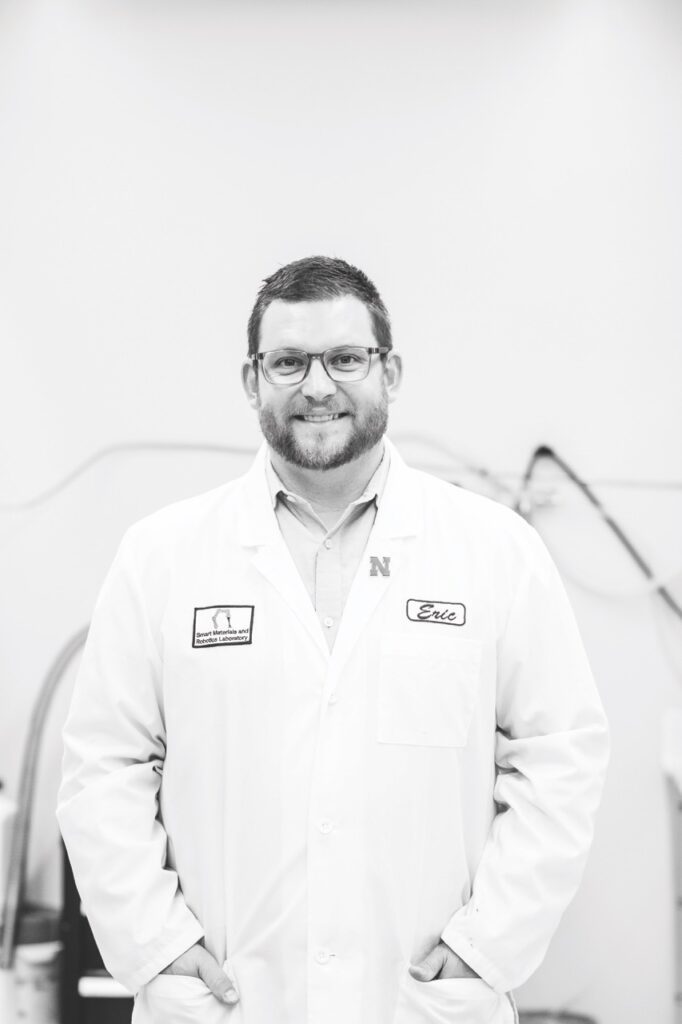
Eric Markvicka, Ph.D., the Robert F. and Myrna L. Krohn Associate Professor of Biomedical Engineering, says it should not be surprising that the National Academy of Inventors found him, one of its newest senior members, in Nebraska.
Markvicka is the sixth University of Nebraska–Lincoln researcher to earn senior member status, and the National Academy of Inventors ranked the University of Nebraska System 49th nationally in the number of U.S. utility patents secured in 2024. The university has a culture of innovation, Markvicka said, and he attributes some of that to where it’s located.
“I’m from Ravenna, Nebraska, a small farming community, and just being out in the middle of Nebraska you had to be innovative to solve problems,” Markvicka said. “There would be several times where equipment or something would break down. You have baling wire, duct tape and WD-40 and you’d have to figure out some way to get going again. Innovation is really in the lifeblood of Nebraska.”
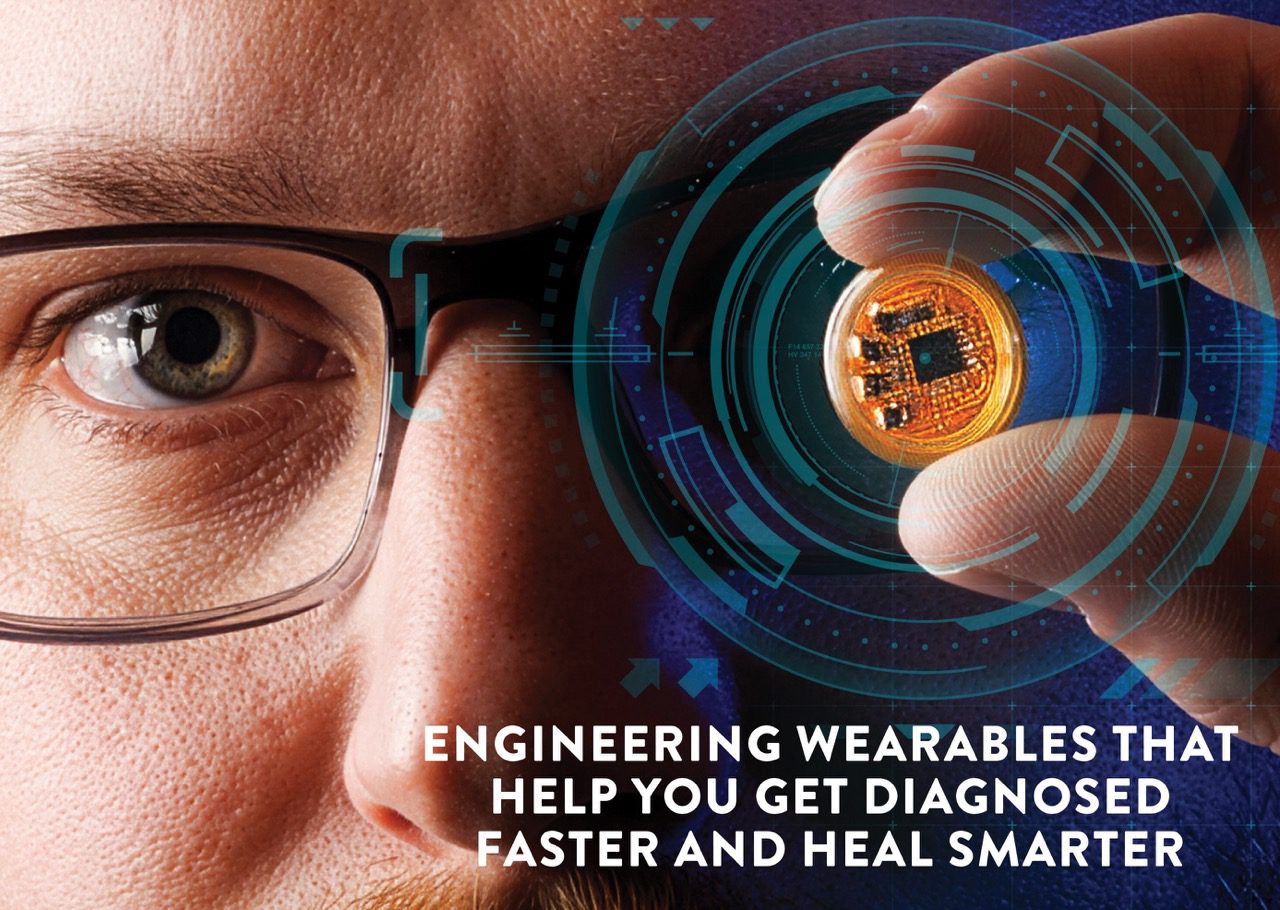
Today, the tools of innovation in Markvicka’s Smart Materials and Robotics Laboratory at UNL involve computers and such soft materials as rubbers, gels, liquid metals and fluids that, among other things, can be engineered into wearable health monitoring systems.
Some of the research involves technology that can identify damage from a puncture, pinpoint the location and initiate self-repair. The university and its donors reward innovation, Markvicka said, citing the upgraded lab that was part of extensive renovations and expansion at the College of Engineering and his privately funded professorship.
At many institutions, endowed professorships are reserved for senior faculty who have been promoted to professors.
“An assistant professor (and now associate professor as of August 2025) having something like this is really unheard of, and that has allowed us to begin to ask questions that we wouldn’t have been able to otherwise,” Markvicka said.
From the Lab to the World
Markvicka gave examples of research that is close to having real-world applications. For one, he is expected to finish the engineering aspect in about a year and then start a clinical study with 60 patients in August 2026. The aim is a wearable device that can diagnose chronic obstructive pulmonary disease, or COPD, in hours instead of after days of burdensome daily symptom surveys.
Another monitoring device that’s worn on the knee is used to measure knee joint angles, information that’s important to understand the risk of an ACL injury, which is common among athletes.
“Our team is working on creating a wearable device that can be used in the real world, wherever the athletes might be, so that these metrics could be measured in real time and outside of a controlled laboratory environment, which we think could have huge impact.”
Markvicka’s knee research is being conducted in partnership with the University of Nebraska Medical Center. The information gleaned would help improve biomechanics and reduce risky motions. Markvicka said there are also military applications.
“Think of paratroopers jumping out of an airplane,” he said.
“They’re generally landing in some of the most dangerous places in the world, and if they happen to land incorrectly, that could be catastrophic.”
Learning to Innovate
Graduate students working with Markvicka are gaining real-world experience finding their own solutions to problems. Andrea Mikulasova, a third-year Ph.D. student, is researching how to help electronics stay cool so they don’t overheat, making them more reliable, longer lasting and energy efficient.
“What I really appreciate about Dr. Markvicka,” she said, “is how much freedom he gives us to be creative while still grounding our projects in real-world impact.”
Mikulasova wants to keep building technologies that improve people’s lives, whether by working in academia, industry or global health.
Fourth-year Ph.D. student Patrick McManigal hopes to continue the culture of innovation he’s experienced at UNL after he graduates. He plans to start a company in Nebraska around wearable devices and said Markvicka encouraged him to think about entrepreneurship and how to get engineering solutions into the world.
“Everyone here is working on something really incredible and advanced,” McManigal said, “so cutting edge it’s amazing.”
“Innovation is really in the lifeblood of Nebraska.”
Eric Markvicka, Ph.D
You may also like ...

UNL Libraries Pilot Program Saving Students Millions in Course Materials Costs
Love Library South turns 80 — and it’s anything but old-school. Discover how University Libraries are saving Huskers millions and shaping the future of learning.

A Legacy of Husker Spirit
When Debra White stepped into Memorial Stadium for her first Husker football game, she was captivated by the spirit of game day. That moment sparked a lifelong connection to UNL and a mission to give back.