
Easing the Financial Strain

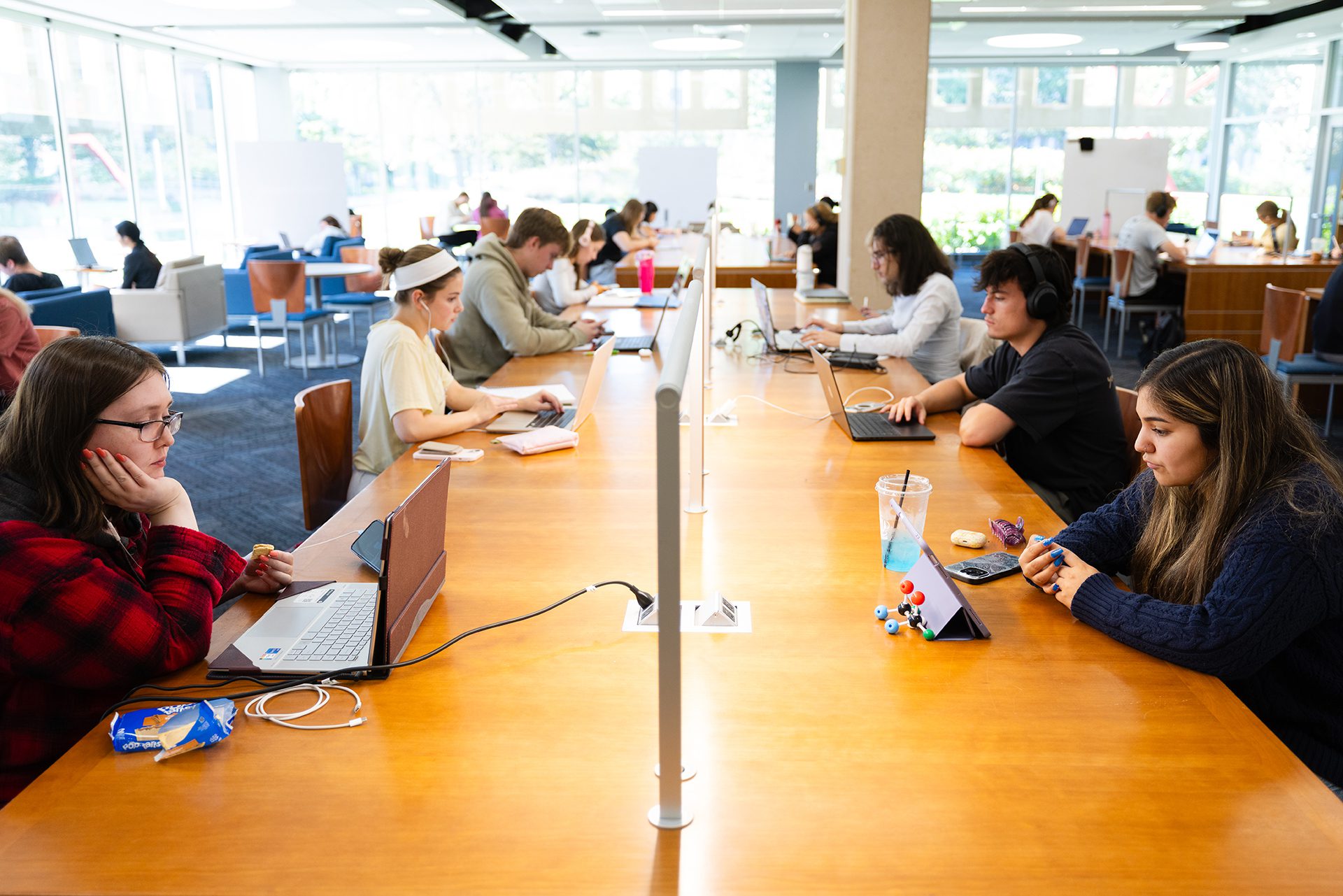
Emily Deal (left) and Briana Rios (right) write and study in the Adele Coryell Hall Learning Commons. Deal is a first-year student halfway through a paper. Rios, a junior, is preparing for an organic chemistry exam. October 16, 2025. Photo by Liz McCue / University Communication and Marketing.

Trustees’ Investment Puts Students on a ‘Level Playing Field’

By Ed Rider

The libraries at the University of Nebraska–Lincoln have always been special places for Nebraska alumni and University of Nebraska Foundation Trustees Tom and Candy Henning. For Tom, Love Library was his “Google” and a quiet place to study when he was a student. Candy preferred the architecture of the C.Y. Thompson Library on East Campus, now the Dinsdale Family Learning Commons.

Shortly after graduating from UNL in 1975, the Hennings received a request to purchase a book for the library. Their $100 donation ― used to buy two books nearly a half-century ago ― ultimately led to a much larger commitment.

Today, the Hennings serve as co-chairs of the UNL Libraries Committee as part of Only in Nebraska: A Campaign for Our University’s Future. In support of the campaign, they pledged a gift that allows the libraries to acquire more unlimited licenses and expand the Libraries Course Materials program, an initiative that provides free course materials to students.

Access to course materials is critical for student success, yet the rising cost of textbooks puts them out of reach for some students. Nationwide, the cost of traditional textbooks has increased by 88% over the last decade.

Recognizing this challenge, the University Libraries launched the Libraries Course Materials program two years ago, giving thousands of UNL students free options that ease financial strain and open doors to learning. The program allows students to access materials through the University Libraries’ collections, including e-books with unlimited user licenses. Since its launch, it has already saved students more than $3.1 million.

“One way the Libraries keeps costs down for students and ensures that they have access to quality learning materials is by purchasing e-books with unlimited user licenses,” said Liz Lorang, Ph.D., dean of University Libraries. “These licenses mean that all students in a course — and all users of the UNL community, in fact — can use the book simultaneously.”

Tom Henning said an investment in the University Libraries resonated with the couple because of how it could positively impact students.

“For what I considered a fairly modest amount of money, we could basically provide textbooks for everybody at UNL. We could do a lot of good here and help a lot of students while putting them on a level playing field,” Tom Henning said. “Whether you came from an affluent background or not, you wouldn’t be disadvantaged relative to having the textbooks you need access to in order to do your studies.”

Savings and Success Across the System

Reducing the cost of course materials for students is a priority across the University of Nebraska System. Open Nebraska is a systemwide initiative designed to increase affordability for students by utilizing open educational resources (OER) and no-cost digital materials.

In 2020, a grant from Women Investing in Nebraska was awarded to support Open Nebraska programs at four University of Nebraska System campuses. The grant accelerated the program’s cost savings, which have reached $38,142,051 across the university since 2018. But OER leaders agree that the impact goes well beyond simple monetary savings. Open Nebraska impacts academic performance because students are more likely to fall behind in class if they don’t have the necessary books on day one of the semester.

A 2022 research study co-authored by representatives from across the university found that University of Nebraska at Omaha students who took part in the program earned 5% more A grades overall, with an even larger effect for first-generation college students, who earned 10% more A grades in their classes. The percentage of students who received grades of D or F, or who withdrew (DFW) from a course, dropped by 4%. The DFW rate for part-time students fell even further, by 8%.

“The work of the Open Nebraska initiative has resulted in more students completing their courses, in students earning better grades and in more students continuing their education at the University of Nebraska,” said Craig Finlay, Open Educational Resources and STEM librarian at UNO’s Dr. C.C. and Mabel L. Criss Library, and one of the co-authors of the study. “The program is also bolstering the overall health of the University of Nebraska System by improving enrollment, completion and retention.”

“For what I considered a fairly modest amount of money, we could basically provide textbooks for everybody at UNL. We could do a lot of good here and help a lot of students while putting them on a level playing field. Whether you came from an affluent background or not, you wouldn’t be disadvantaged relative to having the textbooks you need access to in order to do your studies.”

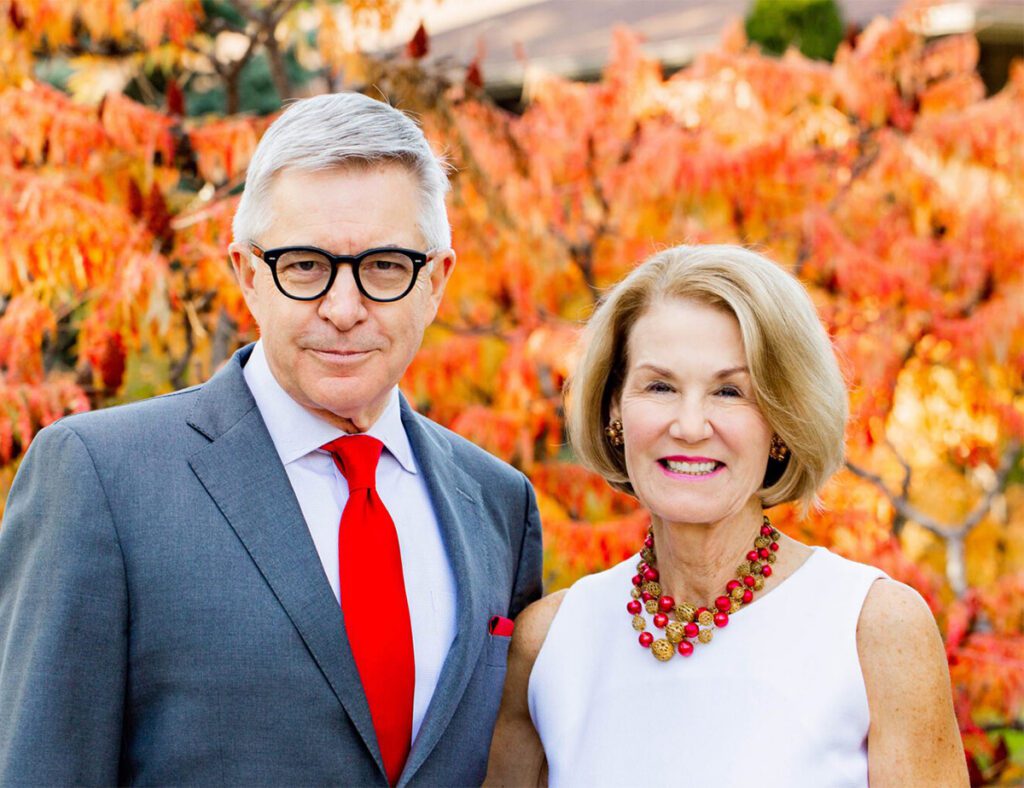
Tom and Candy Henning made a gift to the UNL Libraries to expand access to course materials for students.

You may also like ...

Share This Story