



By Robyn Murray
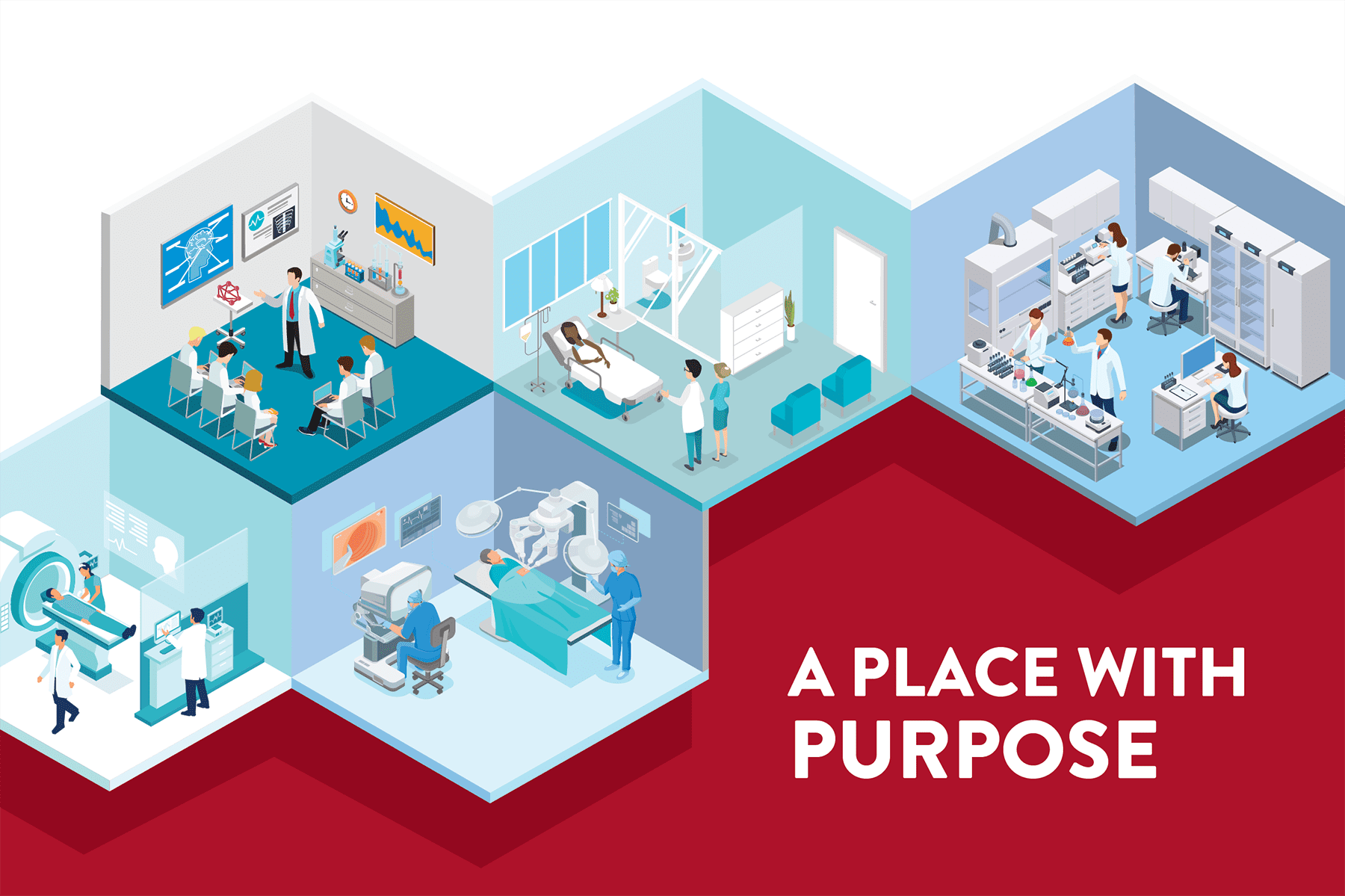
Project Health is the largest investment in the University of Nebraska’s history — a $2.19 billion public-private partnership that will transform health care in Nebraska. It’s not just a hospital. It’s a vision. One that reimagines how care is delivered, how students are trained and how research translates into real-world impact.
And it’s being built with intention, from the ground up.
When Chad Vokoun, M.D., walks the halls of the Innovation Design Unit — a living lab tucked inside University Tower on the University of Nebraska Medical Center campus — he sees the future. The unit, which opened in early 2025, is a test site for Project Health, a new hospital that will soon rise on the northwest corner of UNMC’s campus in Omaha. It’s where new models of care are being trialed, where technology is being refined and where the blueprint for a radically different kind of academic medical center is taking shape.
“Project Health will be a huge classroom that will take care of over 500 patients,” said Vokoun, the division chief for hospital medicine at UNMC. “We are thinking about the classroom just as much as the patient experience. And that’s never been done at an academic medical center.”
BUILT TO HEAL
Project Health will serve as the main in-patient clinical hospital for Nebraska Medicine, UNMC’s primary clinical partner. It will expand access to specialty care and increase the patient capacity of Nebraska Medicine by 50%.
Inside, the rooms will be larger, quieter and more welcoming. Designed with families in mind, they will be built to reduce the time patients spend moving through the hospital, so they can spend more time healing.
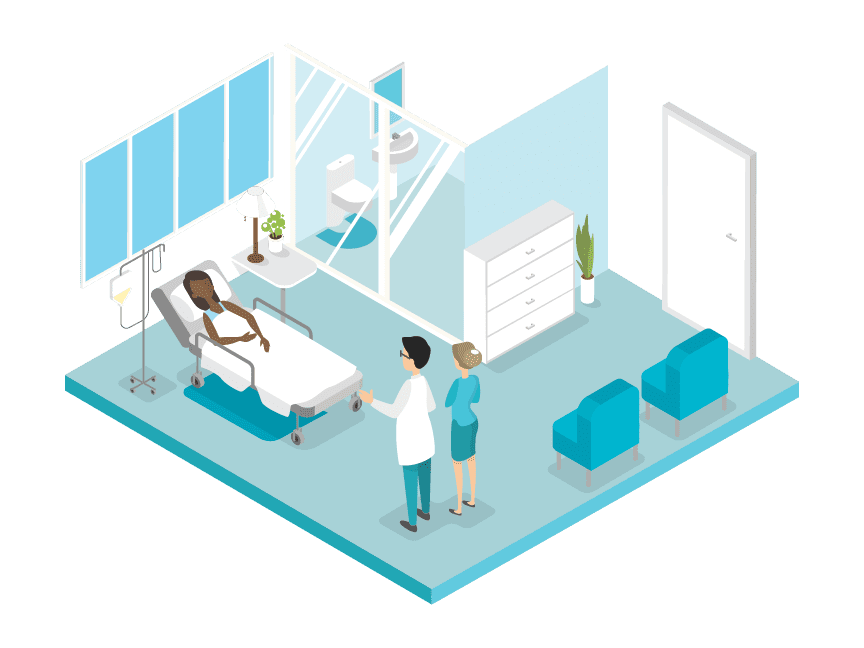
“We are condensing 90% of inpatient care into one tower,” said Vokoun, who also serves as a hospitalist for Nebraska Medicine. “So, students and physicians will be able to see their patients more frequently, and patients will have more time to truly be treated instead of traveling from one location to another in a bed or in a wheelchair.”
Rooms will have more space for family and learners, so patients won’t feel crowded. They’ll also be equipped with virtual nursing tools and real-time monitoring, which will be working in the background to keep them safe and their care more efficient.
Dele Davies, M.D., interim chancellor at UNMC, said the patient experience will be transformational.
“The technology in Project Health will allow us to take the high-quality care we provide to another level,” Davies said. “Every aspect of patient care will be monitored to learn from and improve upon. It’s going to be a very, very different experience.”

BUILT TO TEACH
Most academic hospitals are built for care first — and then try to wedge in teaching space wherever it fits. Project Health flips that model. One-third of the hospital’s square footage will be dedicated to education. That’s unprecedented.
“This will be one of the largest allocations of learning and teaching space in an academic medical center that has ever been planned in the country,” said University of Nebraska System President Jeffrey P. Gold, M.D.
The design includes patient rooms large enough for team-based learning, integrated classrooms and spaces for reflection and rest. Davies said Project Health will be a space where students feel supported and want to be.
“Our students work really hard. It’s a lot of stress, and we know where we work impacts our mental status and well-being,” Davies said. “But at Project Health, students will be able to come to a place they look forward to going. It’s going to lift up not just the trainees but also our patients and our staff.”
Gold said the academic-first design will help recruit the talent Nebraska needs to meet demand for health care across the board.
“Having the ability to add between 25% and 40% more health care professionals to the workforce pipeline is a unique opportunity that many institutions across the country would cherish,” Gold said.
And it’s not just about new students. Project Health also will support reskilling for current professionals — preparing them for a future shaped by AI, data science and new models of care.
BUILT TO DISCOVER
Project Health will sit adjacent to Catalyst and CORE — two facilities in Omaha’s new EDGE District designed to connect researchers, clinicians and industry partners. That proximity matters. It means more conversations, more collaboration and faster innovation.
Within Project Health, research scientists, clinicians and patients will work under the same roof, similar to the highly successful Fred & Pamela Buffett Cancer Center.
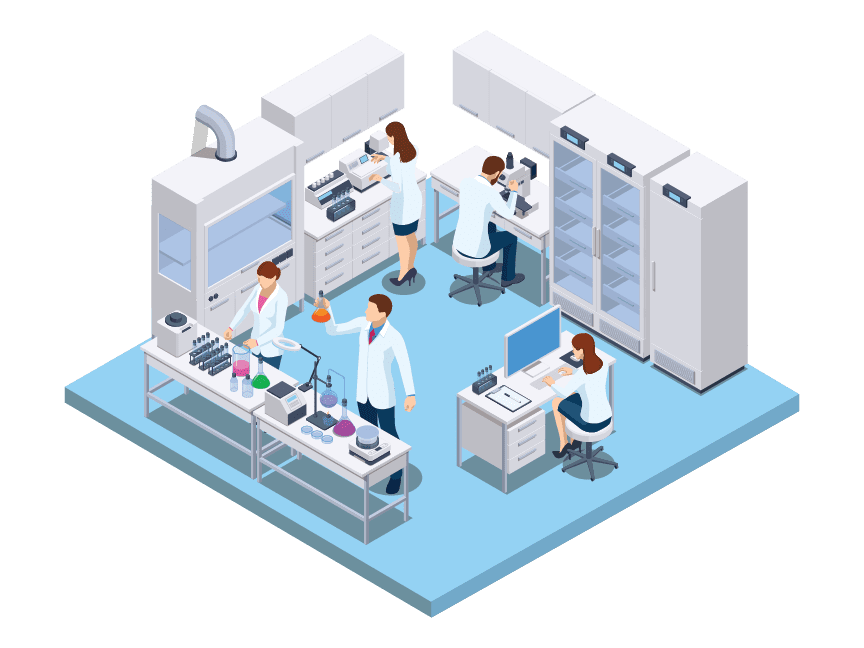
“Riding in the same elevators, sharing space in the break rooms, it creates a unique interaction,” Gold said, “and it’s been extremely successful in the quantity, quality and scope of cancer research that we’ve seen grow since the cancer center opened. We need to learn from that lesson. We need to figure out how to do it better, and we need to do more of it across all areas.”
For patients, that will mean benefiting from the latest research being integrated into their care and opportunities to participate in potentially lifesaving clinical trials. One such trial is already underway. Recently, a patient from Blair, Nebraska, was the first in the U.S. to receive CAR T-cell therapy for multiple sclerosis, thanks to a clinical trial that stemmed from clinician-researcher collaboration.
“Having the opportunity to work in close proximity and have collaborative conversations makes a big difference in the rapidity in which we can bring a new trial to Omaha and our networks throughout Nebraska,” Davies said.
BUILT TO GROW
The forecasted economic impact of Project Health is staggering. During construction, it’s projected to generate $3.2 billion and create nearly 20,000 jobs. Once operational, its annual impact will exceed $1.5 billion, supporting more than 8,800 jobs.
It also will help keep rural communities vibrant by training and retaining health care professionals across the state.
“This is going to be really dramatic for Omaha and for the state,” Davies said. “These researchers will pull in money from the federal government and from national and global consortia.”
And it’s being made possible by a groundswell of support — from major philanthropists to everyday Nebraskans.
“It is the biggest philanthropic campaign in the university’s history,” Gold said. “Bringing together not only the major donors, but tons of smaller gifts from concerned people.”
A PLACE WITH PURPOSE
Scheduled to be operational by 2031, Project Health will be more than a building. Driven by a promise to care better, teach better and discover more, the hundreds of people bringing Project Health to life are committed to building a healthier Nebraska for generations to come.
“I work here because I want to teach and take great care of patients,” Vokoun said. “The environment we’re going to be moving into is world class, and that’s what our patients and our learners deserve when they come to an institution like UNMC.”
“Having been involved in countless recruits of department chairs, deans and leading faculty members, I can tell you they all talk about Project Health. This is one of the main things they’re excited about coming to Nebraska to be part of, because it’s so unique in its concept and scope. It will be much more than just a beautiful building; it will be a magnet for talent.”
Jeffrey P. Gold, M.D., University of Nebraska System president
Impact Across Nebraska
Project Health will expand the critical role of UNMC and Nebraska Medicine as a referral center for the treatment of complex cases, expand rural access to clinical trials and allow patients to work with their local physicians in consultation with their Nebraska Medicine care teams.
You may also like ...
Donor Support Brings Back Smiles At UNMC’s VETSmile Dental Clinic
“What we’re doing couldn’t be done any other way. This program couldn’t exist, and without this program, these people will not receive definitive, life-changing care.”

Recognized Student Organizations at UNMC Continue To Thrive Through Donor Support
“It’s so nice for students to have something outside the classroom, even if it is directly tied to what they’re going to school for.”